Collection
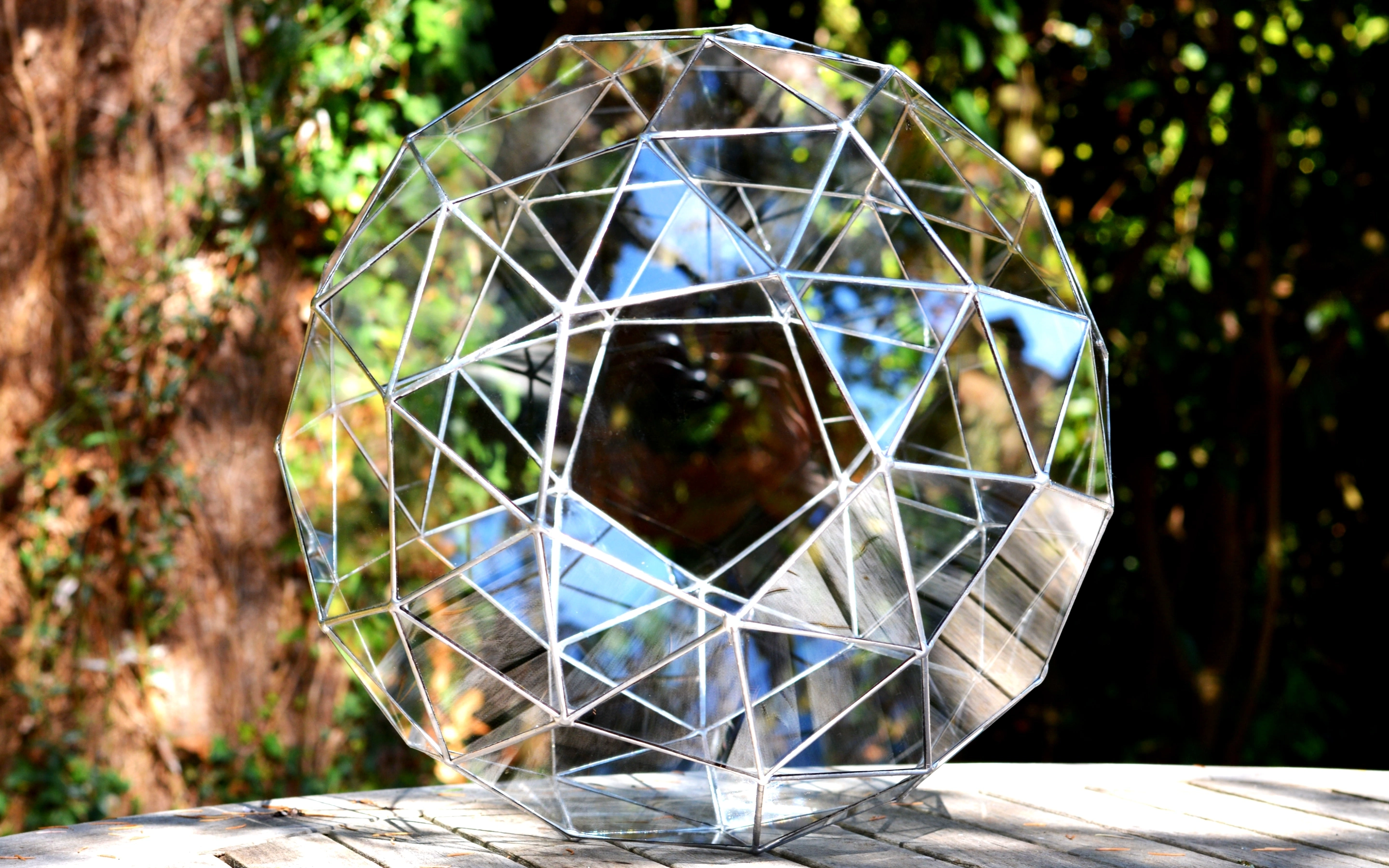
Divine Proportion
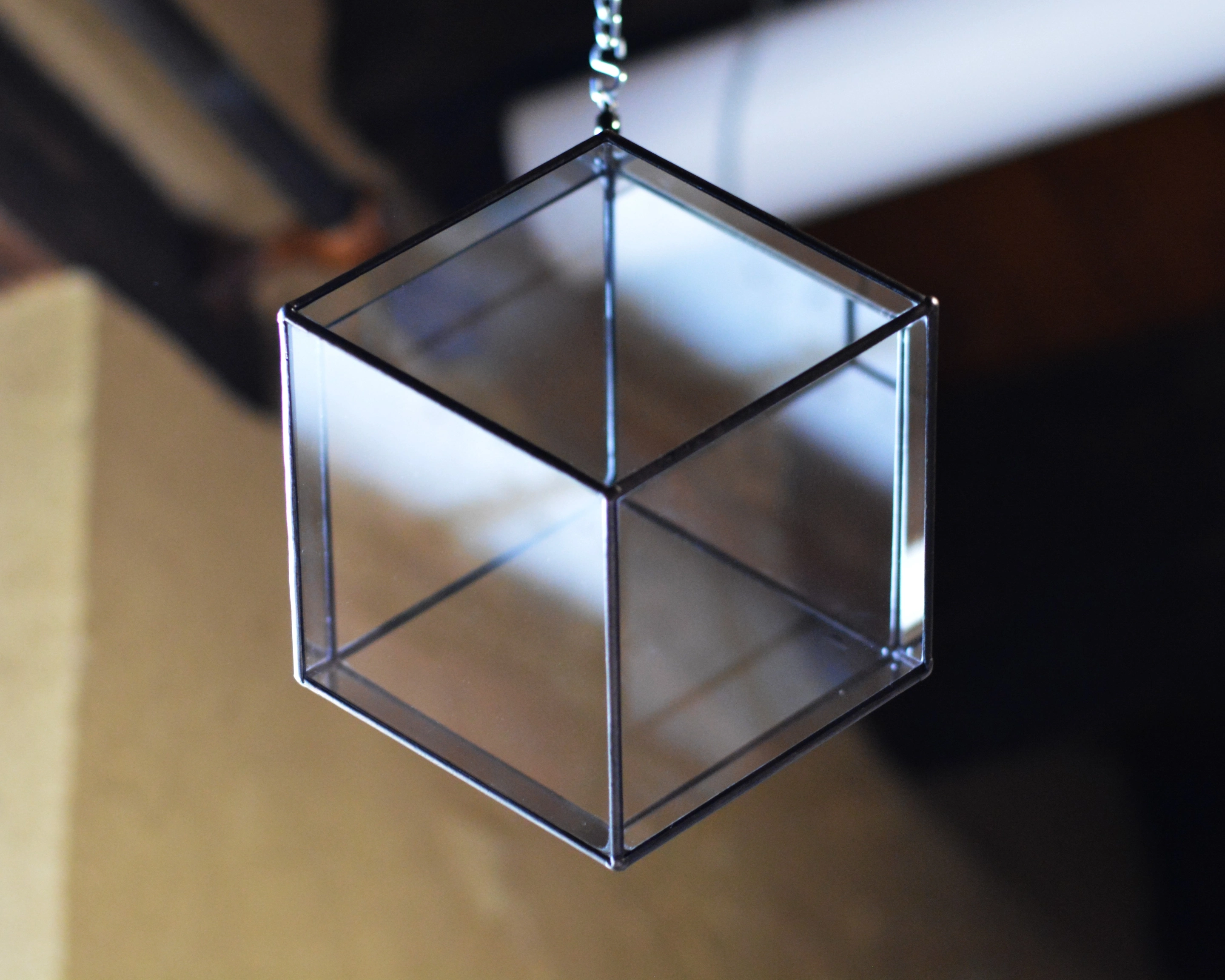
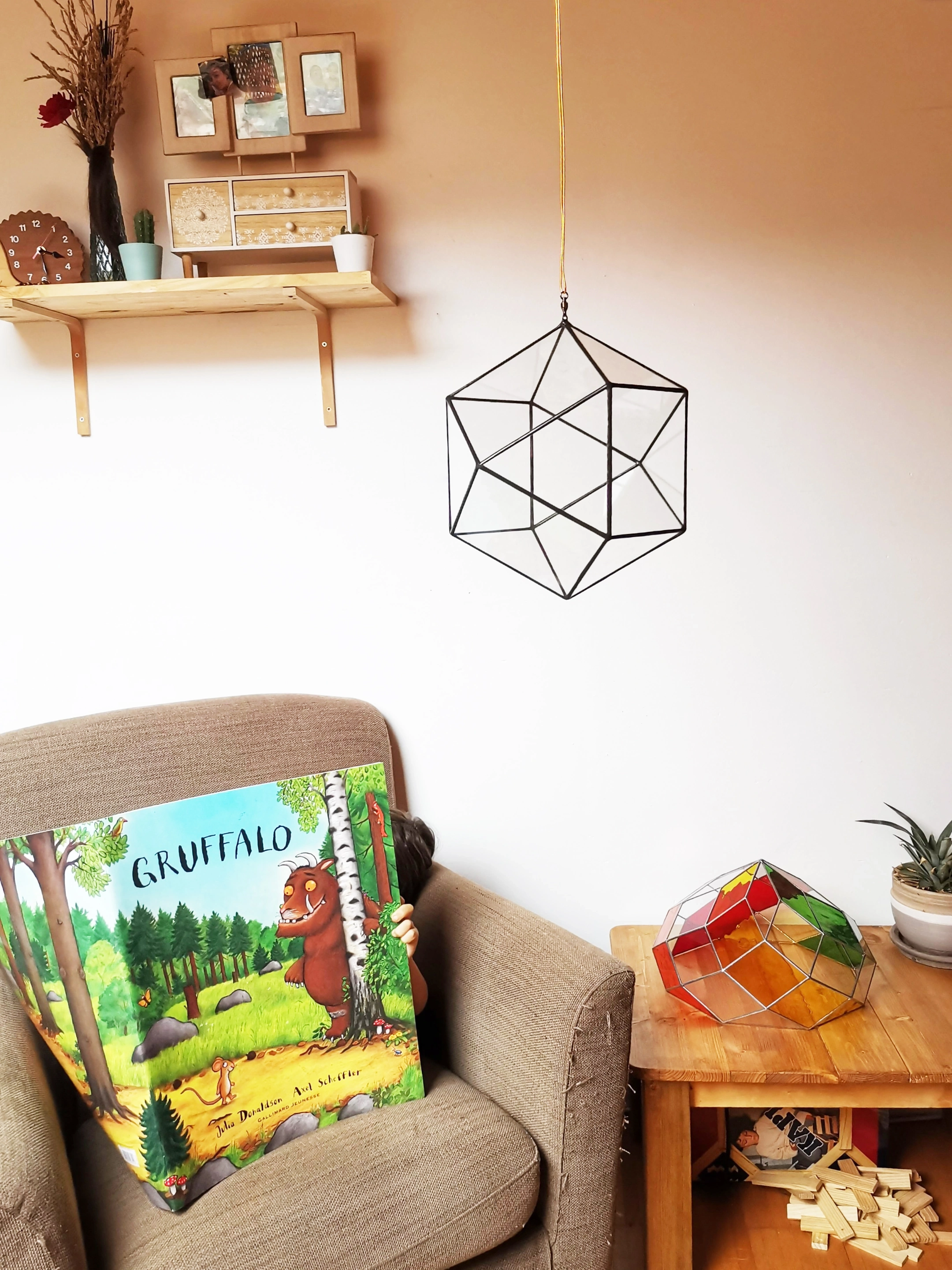
Cuboctahedron
from 160 €
Collections
Full catalog →
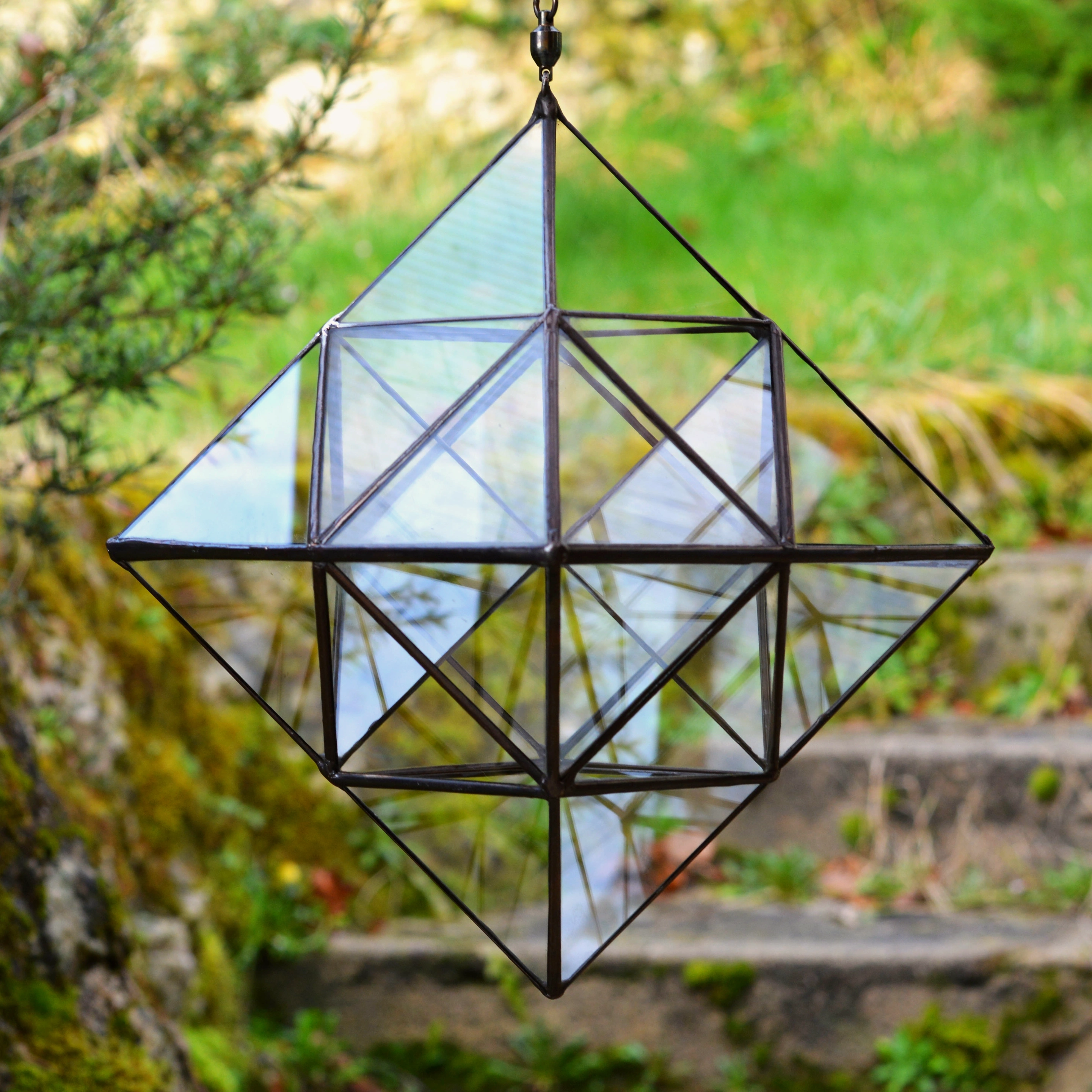
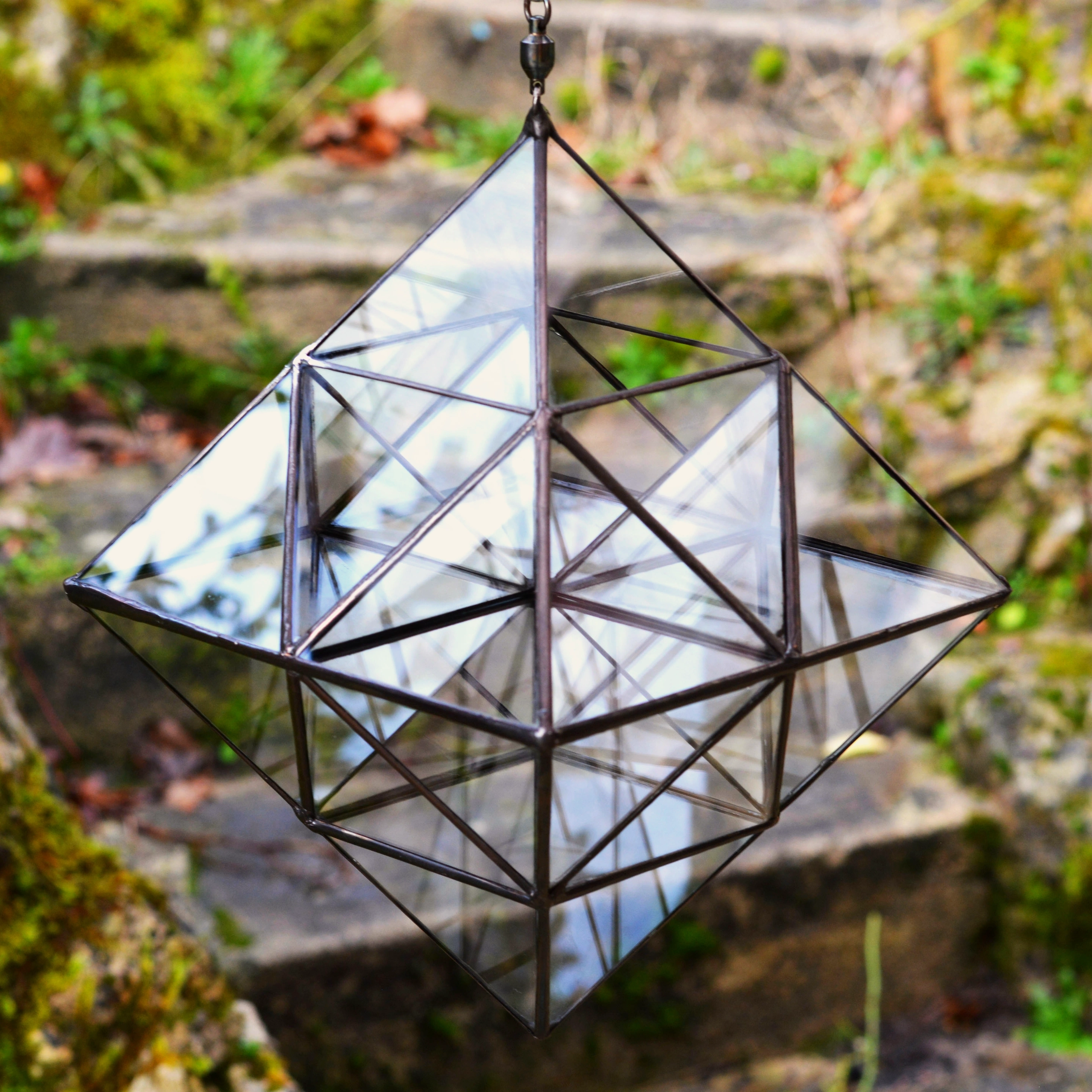
A dodecahedron stretched until a star blossoms from it. From ether to matter, it lacks only movement.
from 420 €4 triangular faces, 4 vertices, 6 edges · the simplest and sharpest of the five Platonic solids.
Known since Antiquity, the five Platonic solids were each identified by Plato with an element, as if he had sensed their vibratory nature. The tetrahedron corresponds to Fire: point, impulse, will, upwelling. Its pure, taut geometry makes it the shape of momentum and beginnings.

To every polyhedron corresponds a dual: each face becomes a vertex, each vertex becomes a face. Each takes shape in the gaze of the other: form and reflection, held together, draw a third figure like an emergent property. To act in symmetry with one's thought, and reflect as best we can our most virtuous wishes.
Perhaps that is what these solids wish to whisper to us.
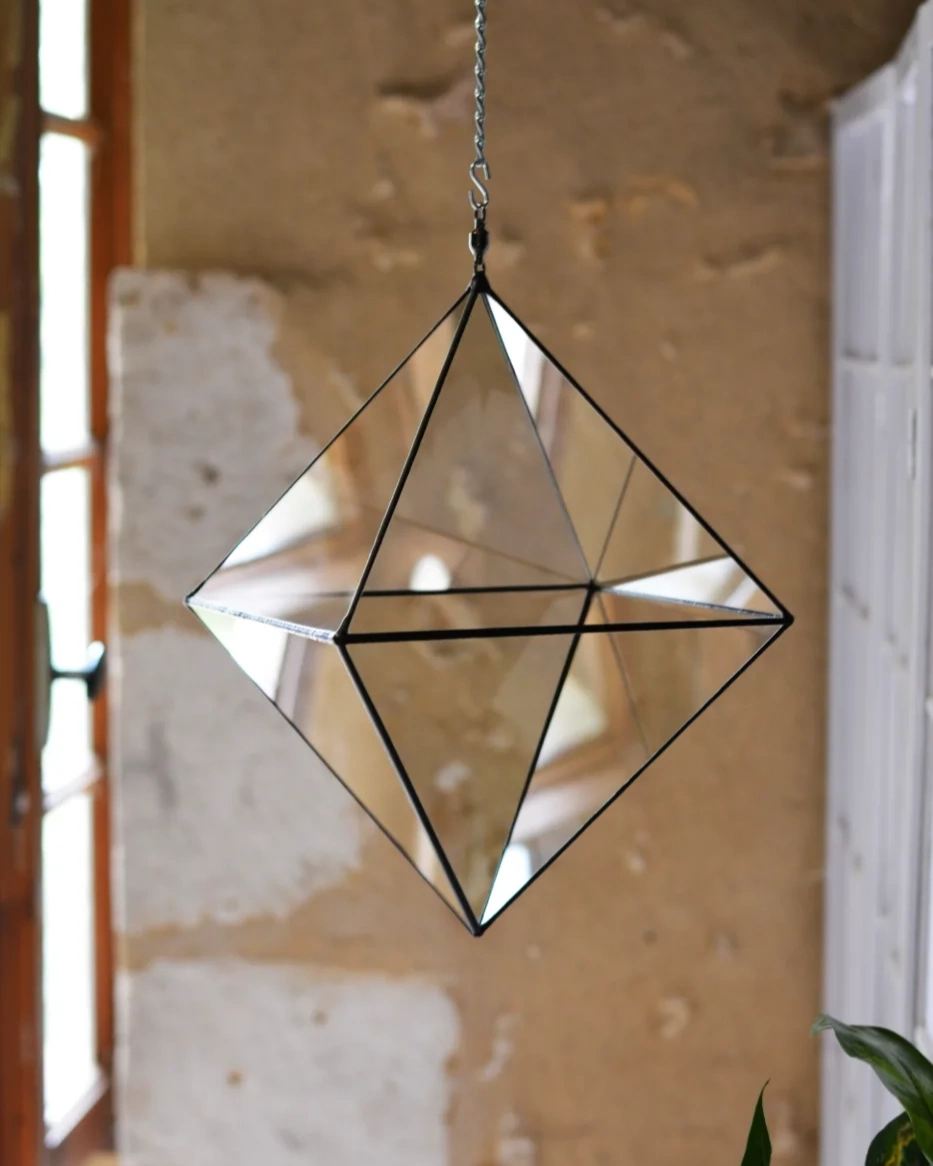
For Plato, the octahedron was air itself, that which circulates, connects, transmits. The shape of subtle movement, between lightness and precision.
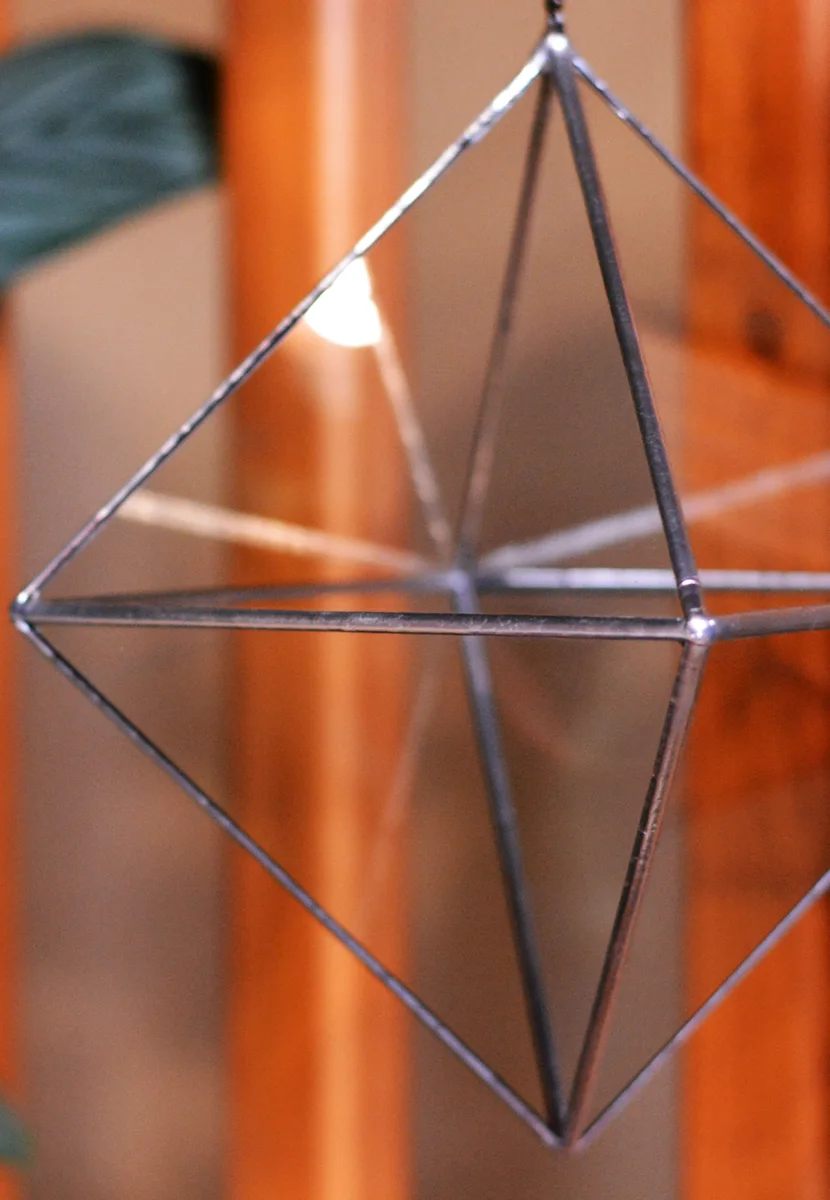
8 triangular faces. 12 edges. 6 vertices. Schläfli symbol {3,4}. It is the geometry of the diamond, which naturally crystallizes as an octahedron.
In the Nyingma tradition it is called Vajra; legend likens it to the “mystery of the mind, awareness of all the buddhas”.
Eight triangles. A single breath.
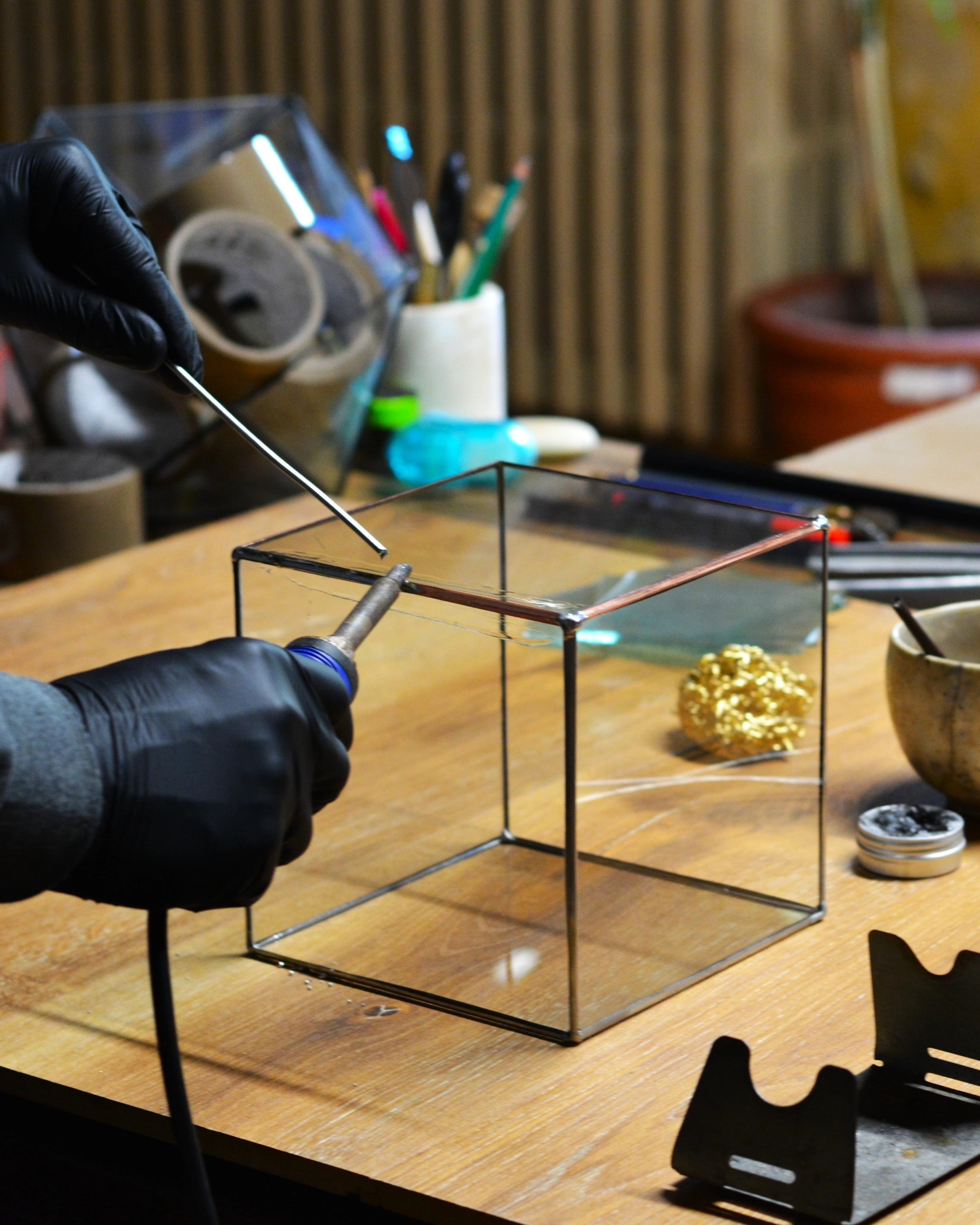
Plato entrusted it with the Earth. Where the octahedron lightens and circulates, the cube settles and endures.
6 square faces. 12 edges. 8 vertices. Schläfli symbol {4,3}.
They are said to be duals. What one carries as faces, the other raises as vertices.
For nothing awakens that was not born of the ground,
and only what has been tested endures.
Each proportion begins to repeat at different scales, in a fractal nesting where the inside mirrors the outside. The geometry seems to breathe toward the infinitely large as toward the infinitely small. A fascinating shape for the eye, inviting contemplation to lose itself in its successive levels, a visible image of the self-similarity found everywhere in nature.
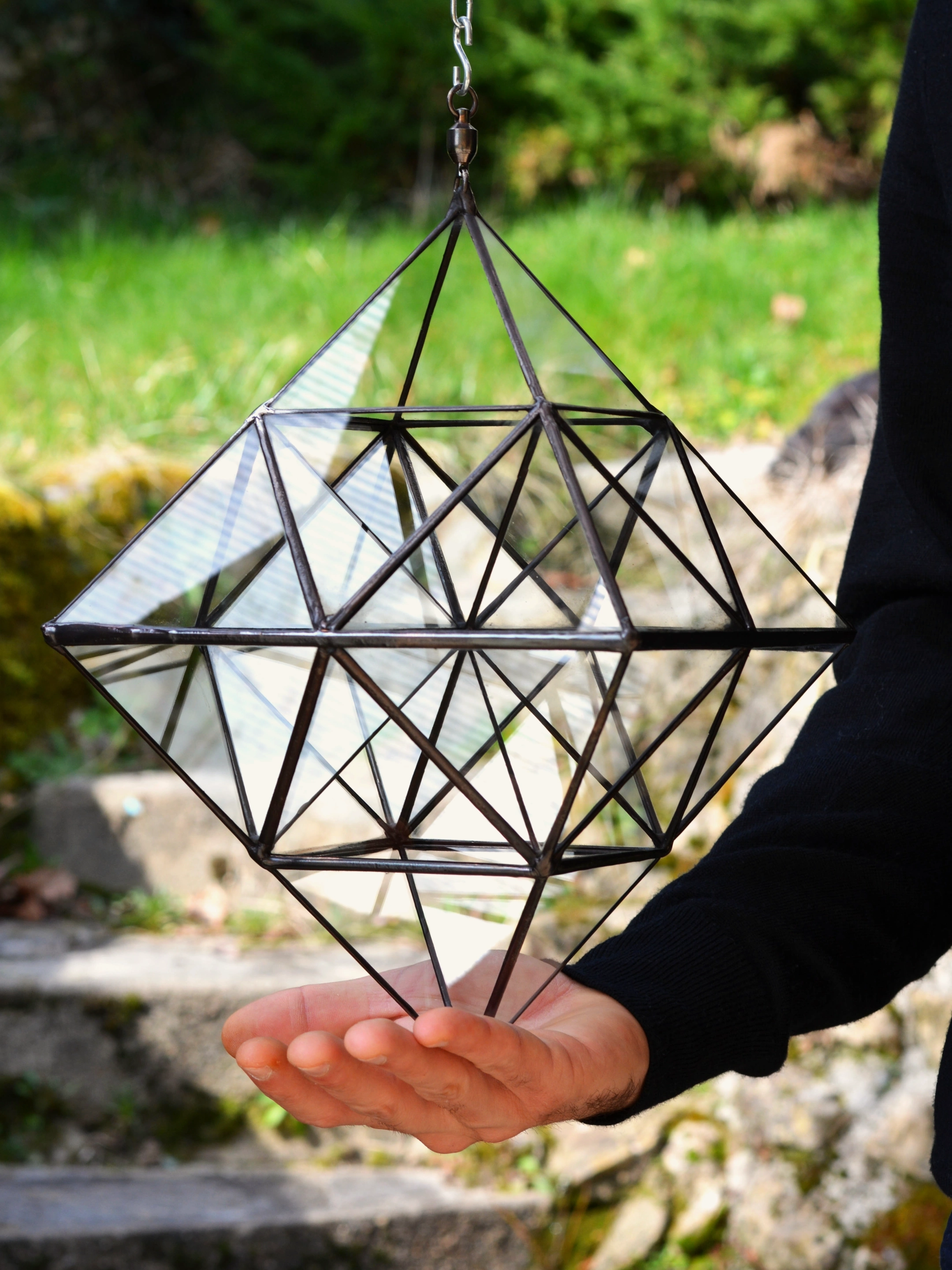
“Days lost in a workshop pass with such intensity, each gesture repeated with such care and simplicity that, like the bird resuming its flight the moment it ends, there is at bottom only the joy of doing without thinking about it.”
The sea, a lake, the river, motionless within movement.
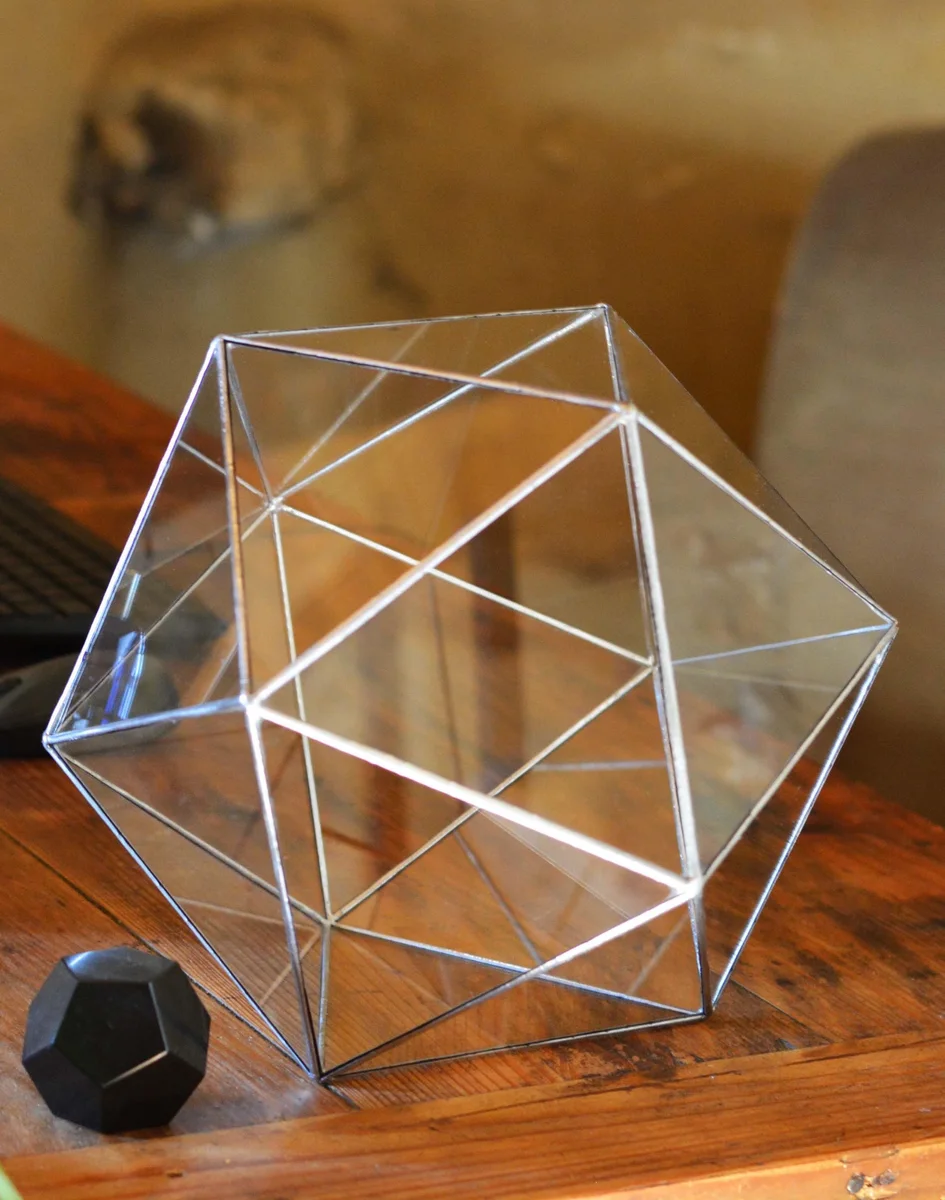
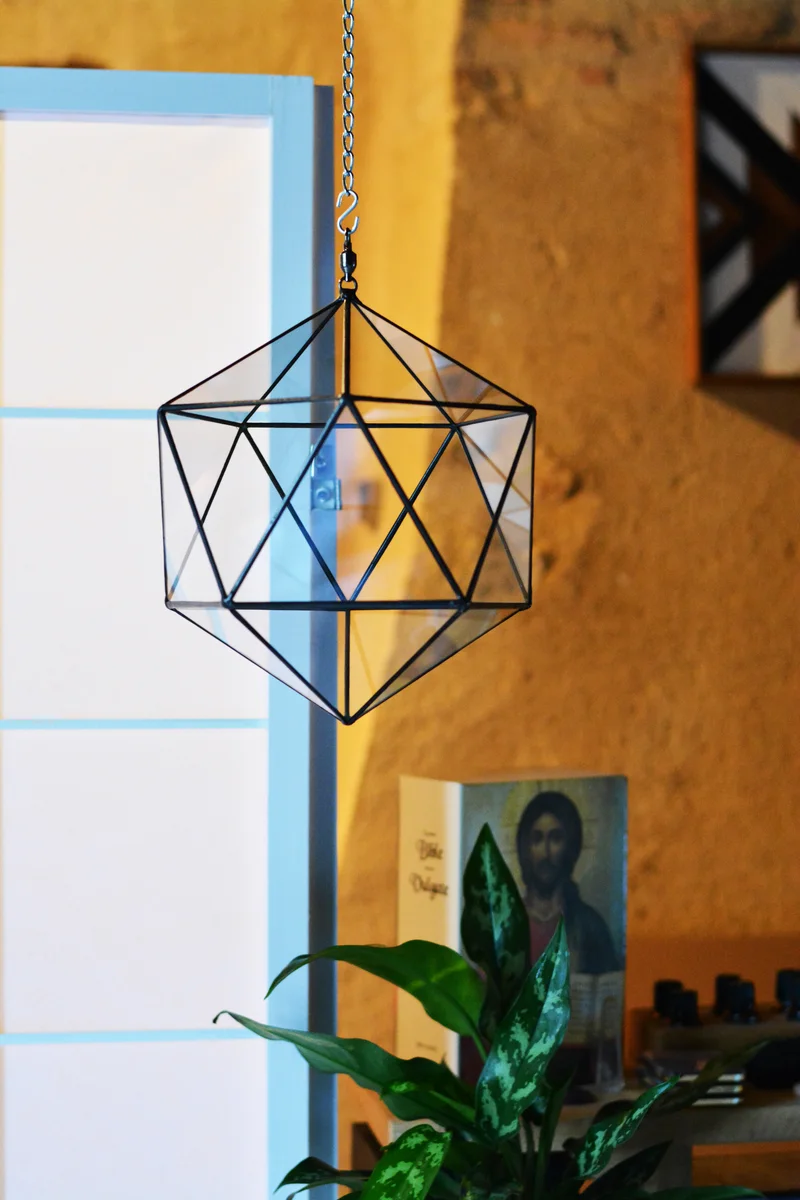
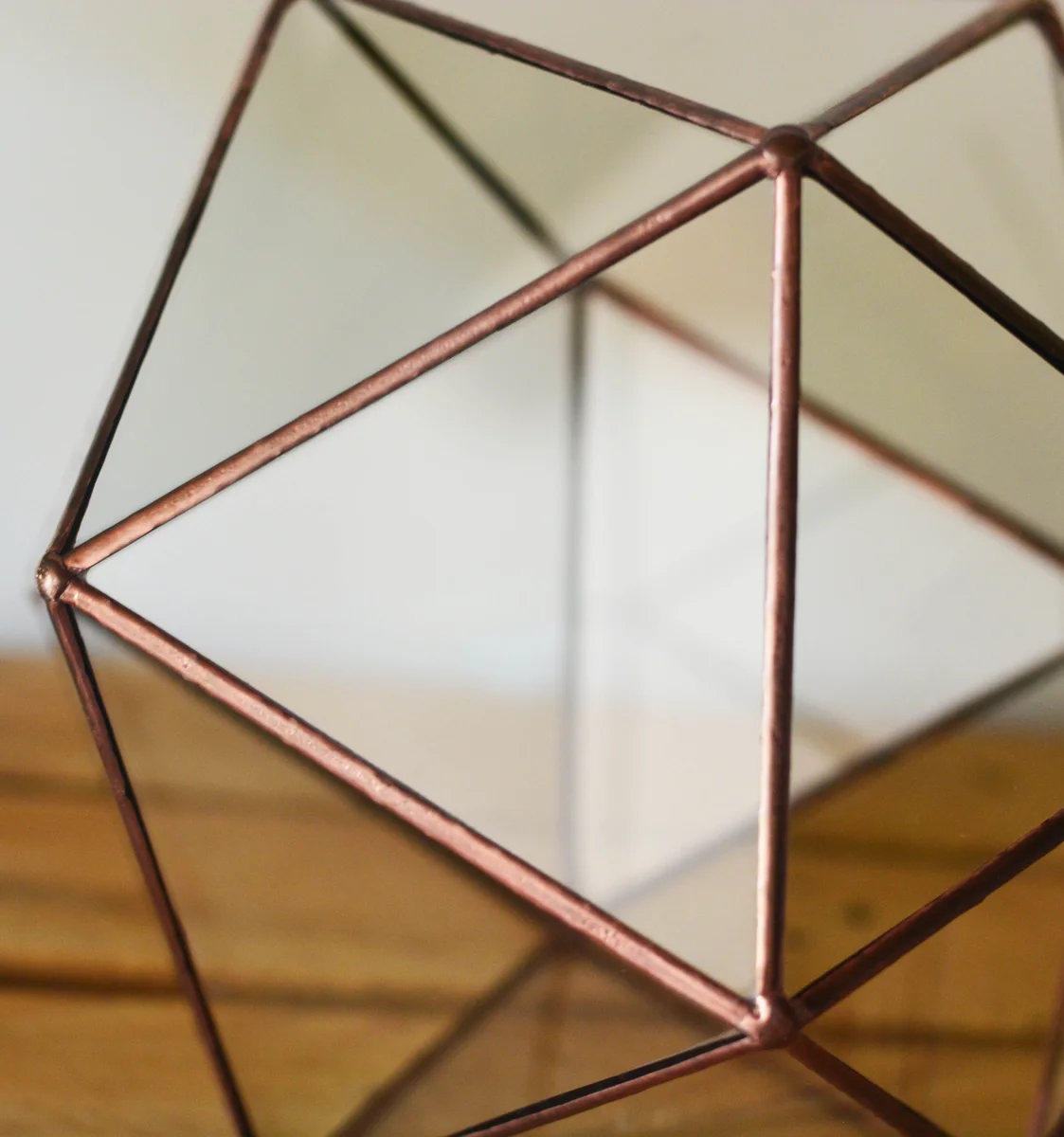
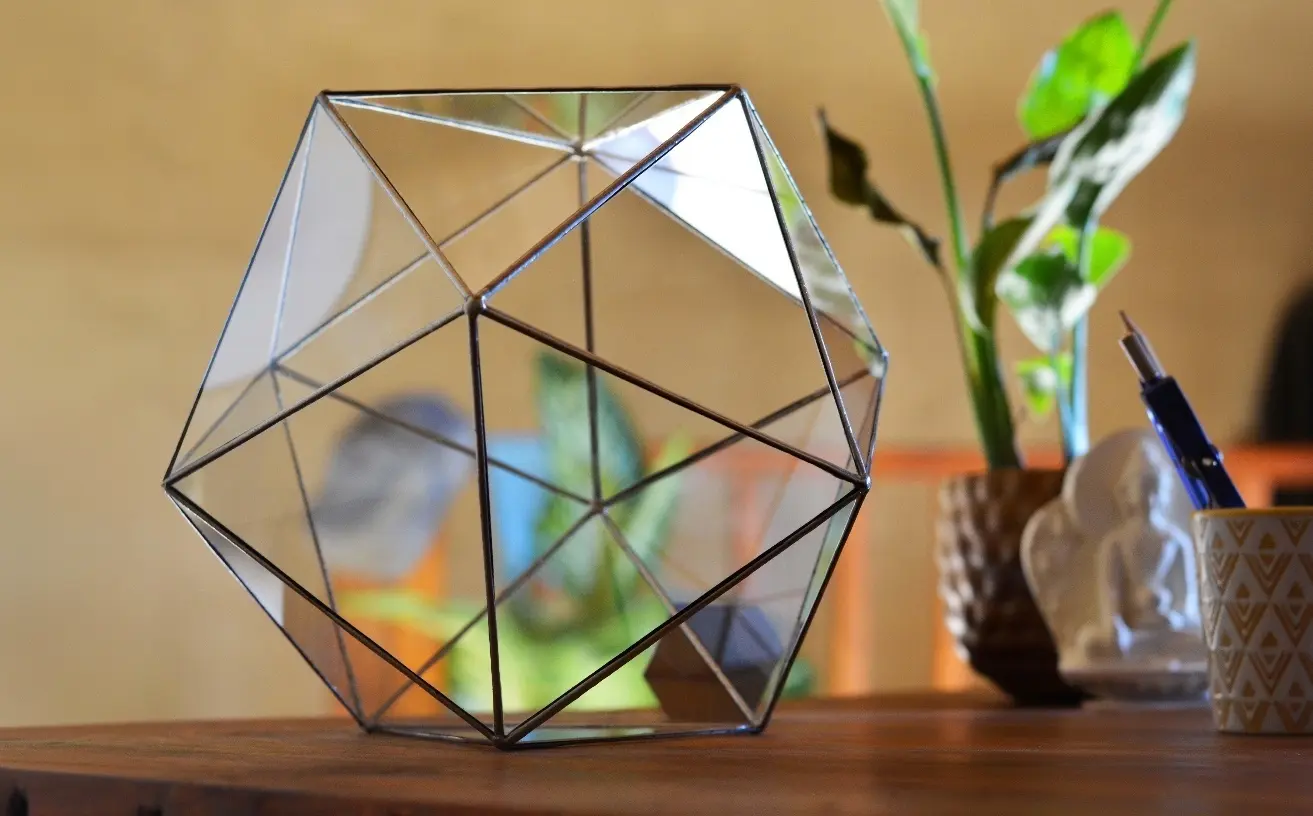
Twenty triangular faces. Thirty edges. Twelve vertices. Twenty equilateral triangles drawing a sphere, like so many particles seeking, from everywhere at once, the same distance.
With the dodecahedron it keeps a rare relationship: they are duals. The number of faces of one is the number of vertices of the other. Two geometries answering each other, containing each other, echoing each other. The same score, played in reverse.
An atomic cluster, 12 atoms at the vertices, one at the center. As if nature kept returning to the same answer. An icosahedral capsid, to envelop life at the microscopic scale.
Perhaps that is what Plato had sensed, without seeing it.
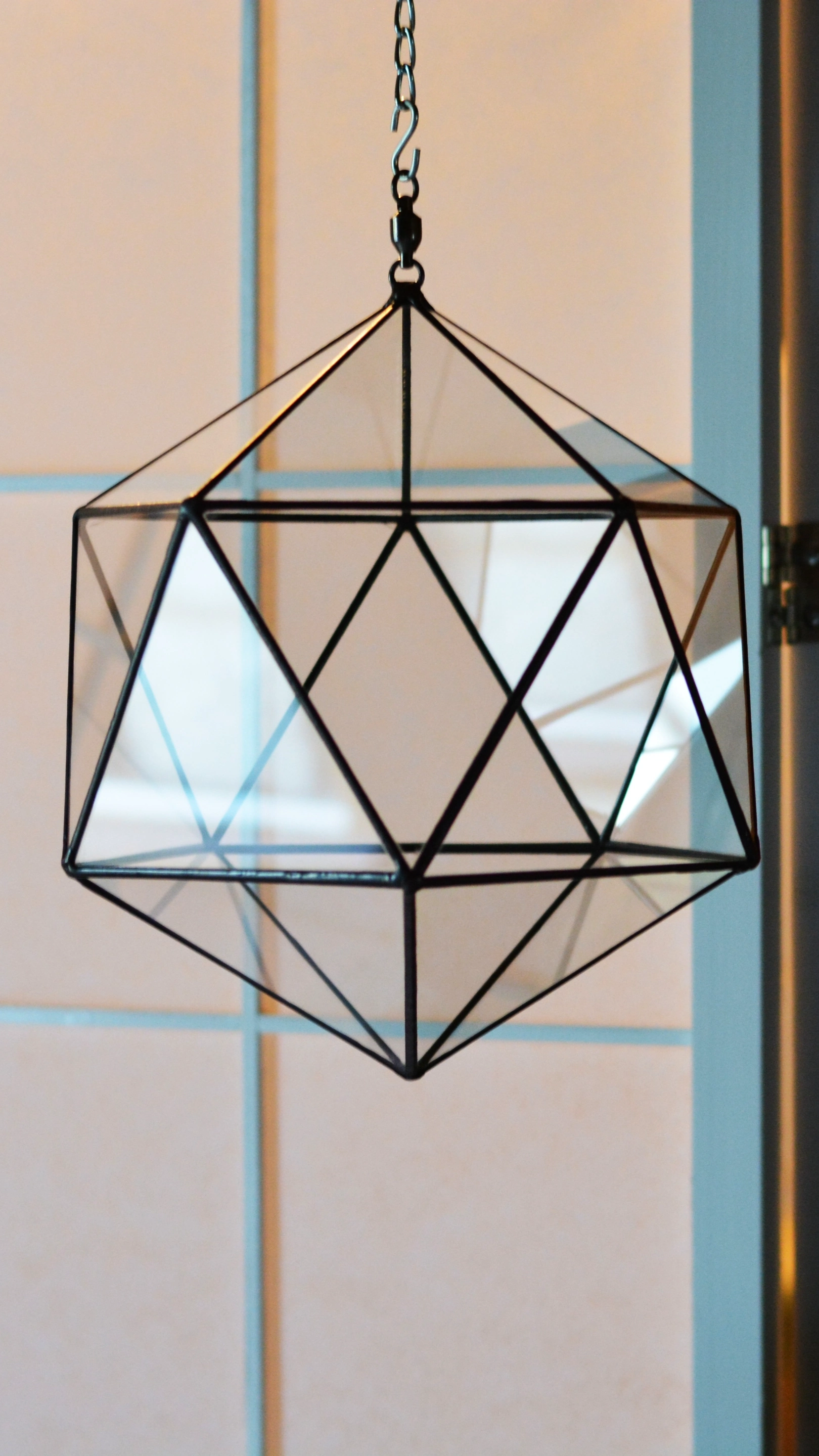
The Dodecahedron has obsessed humanity's greatest minds, unveiling itself to each of them a little more across the centuries. Aristotle gave it a name: aithêr, the ether. That which contains all the others without being any of them. Leonardo da Vinci gave it a shape, a presence; he drew it from every angle. Newton gave it an identity, the invisible force binding the stars together. Einstein, in 1920, gave it a role, no longer an invisible fluid but a set of physical properties existing in a space even devoid of matter.
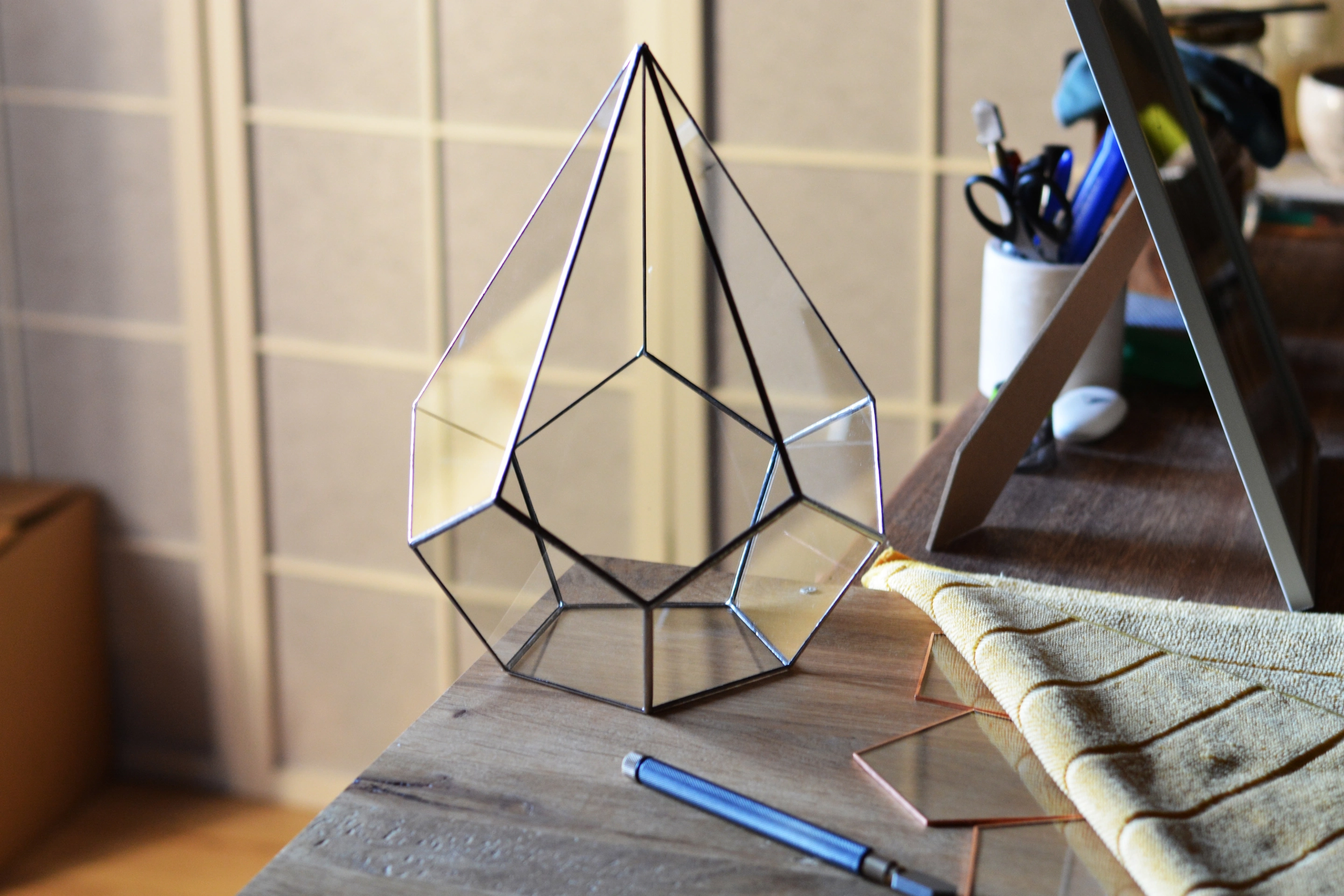
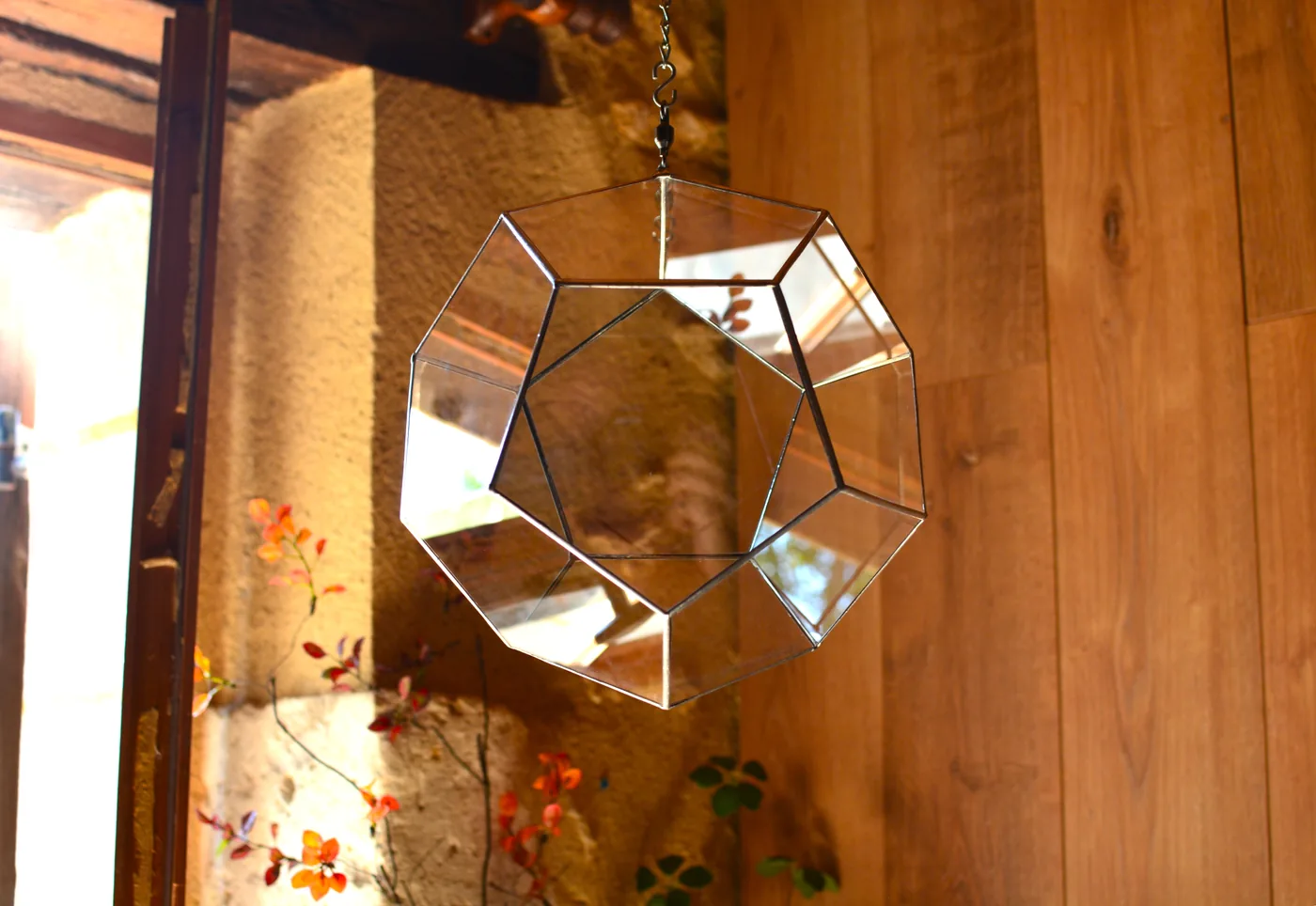
Twelve pentagonal faces. Thirty edges. Twenty vertices. Within every pentagon sleeps the golden ratio. φ = 1.618.

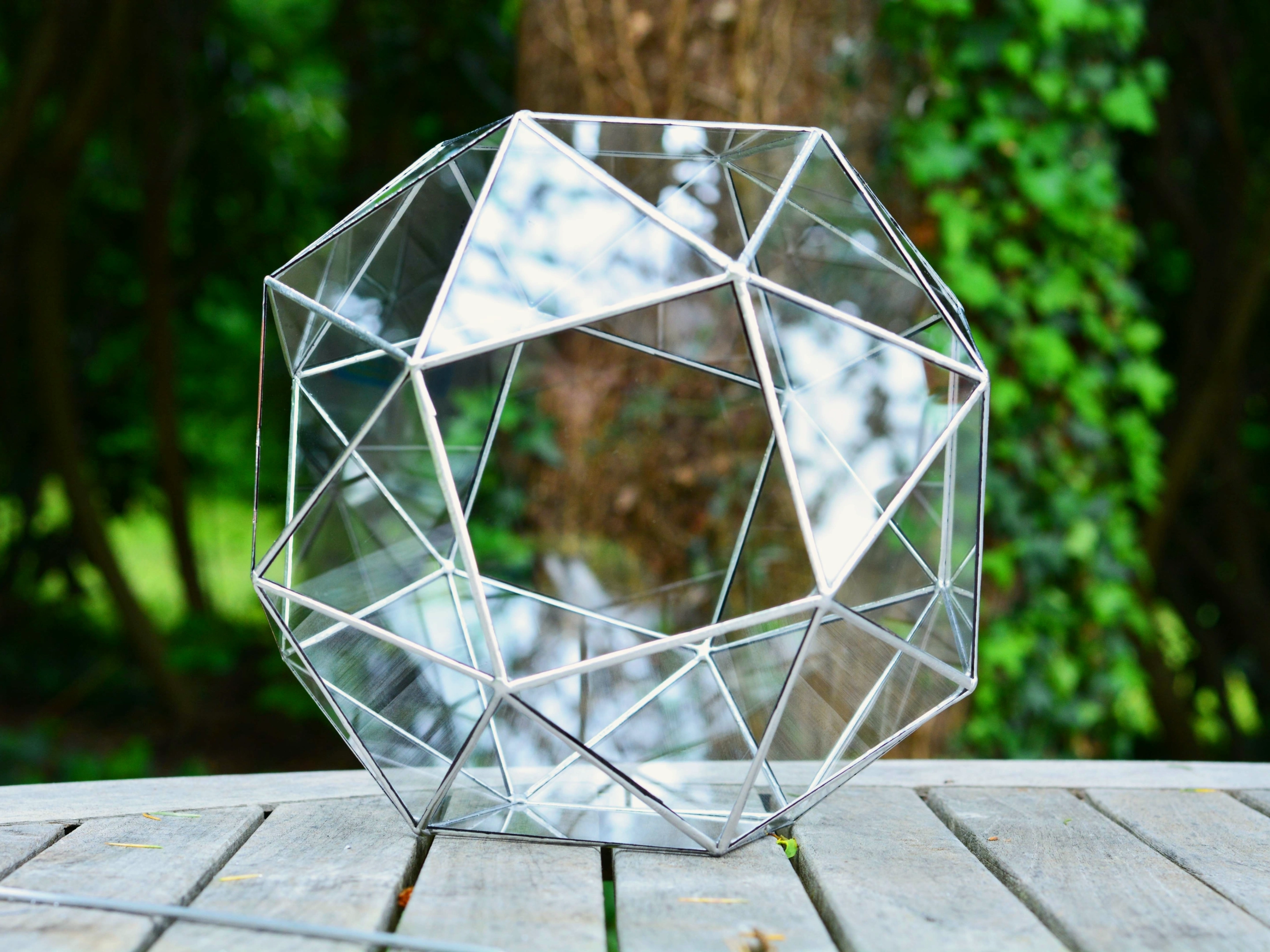
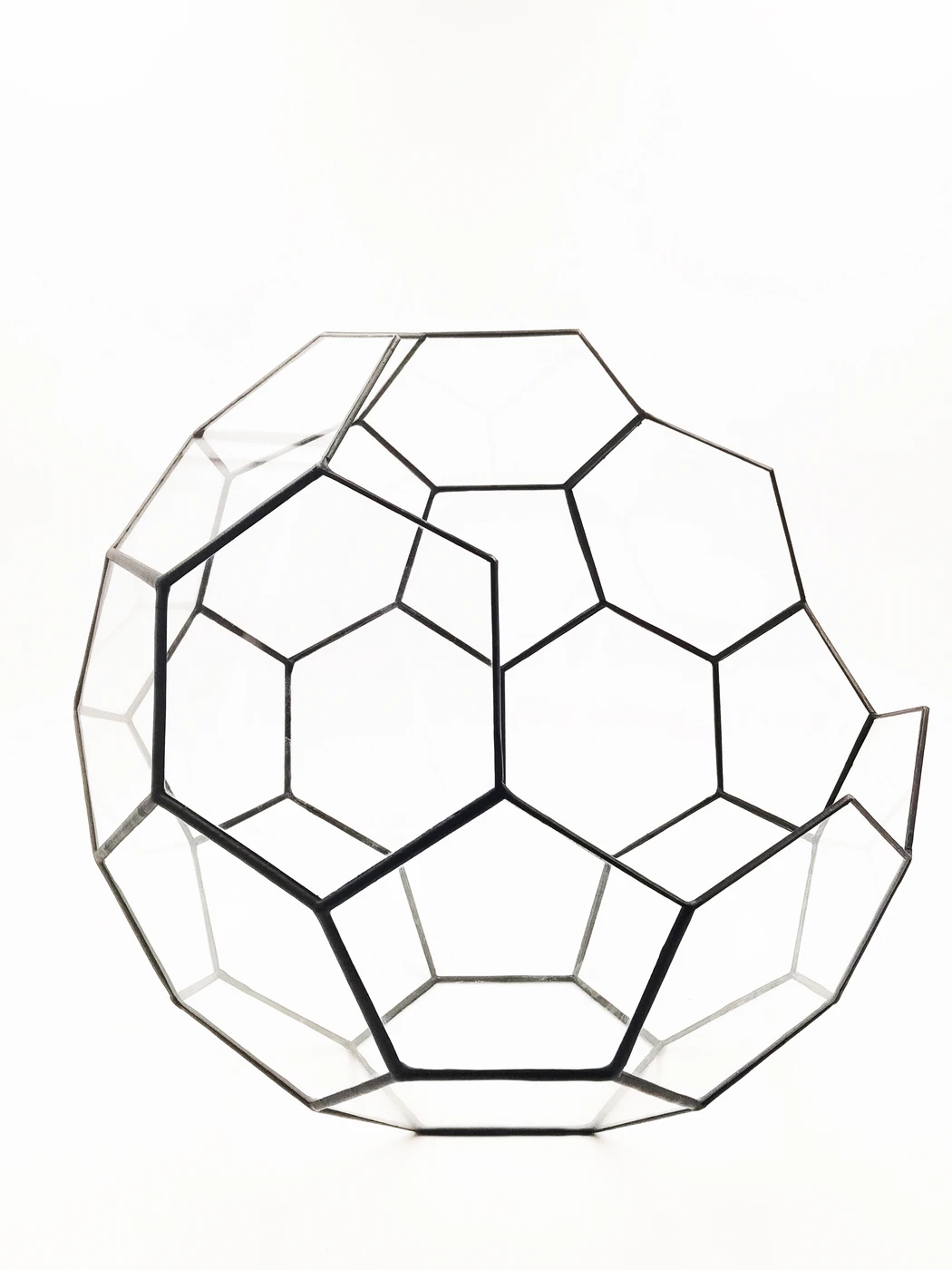
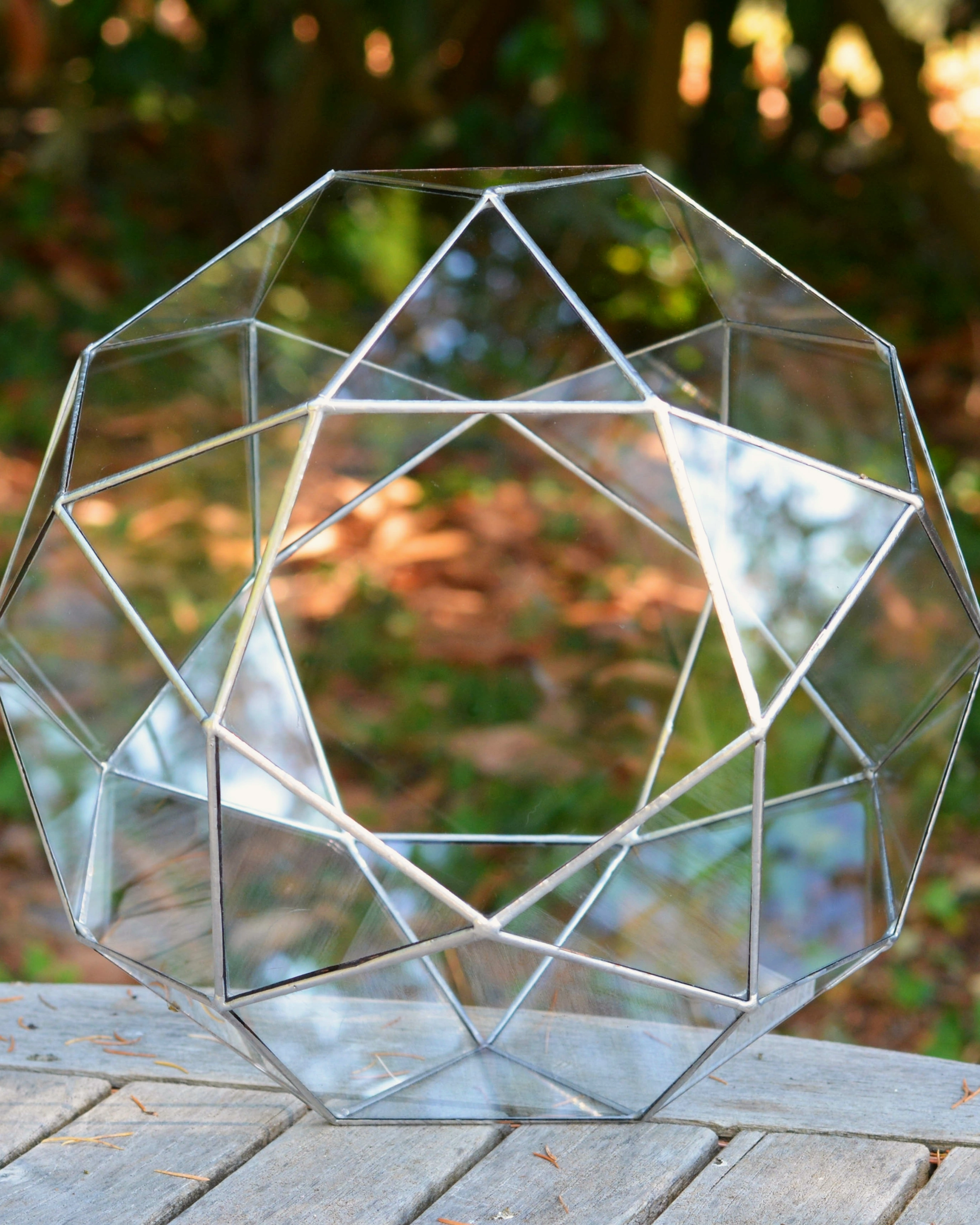 Icosidodecahedron
from 160 €
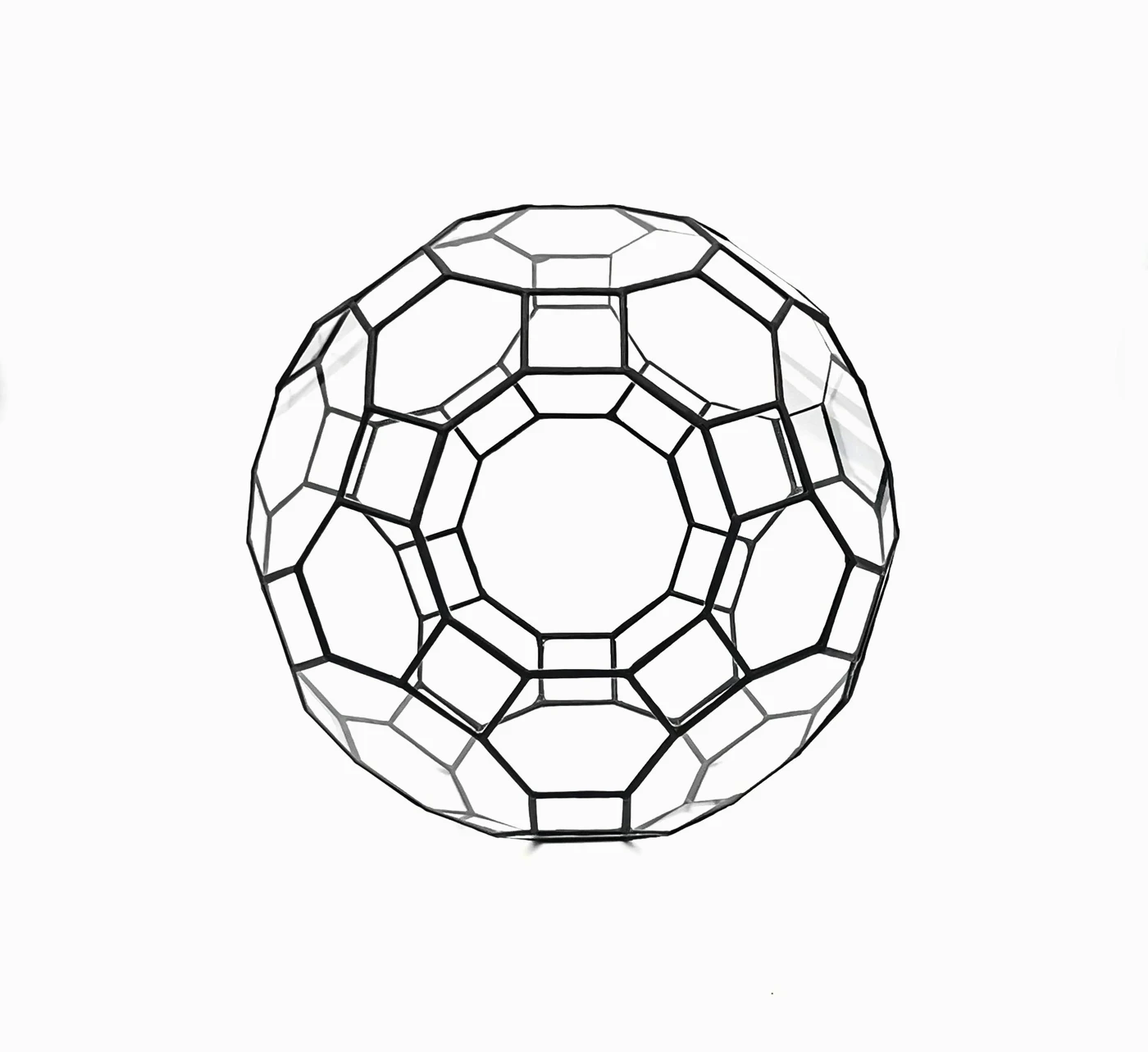
Icosidodecahedron
from 160 €
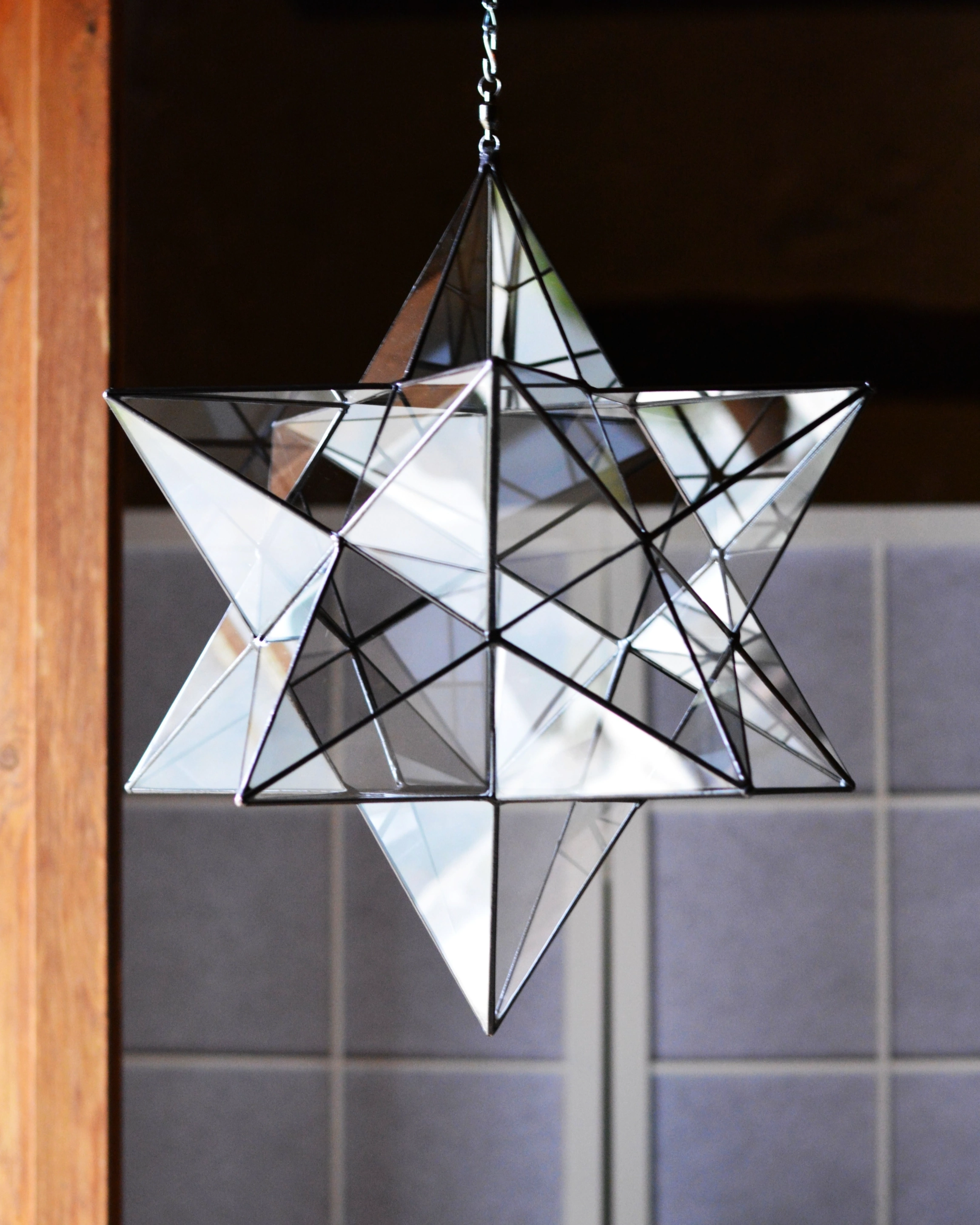
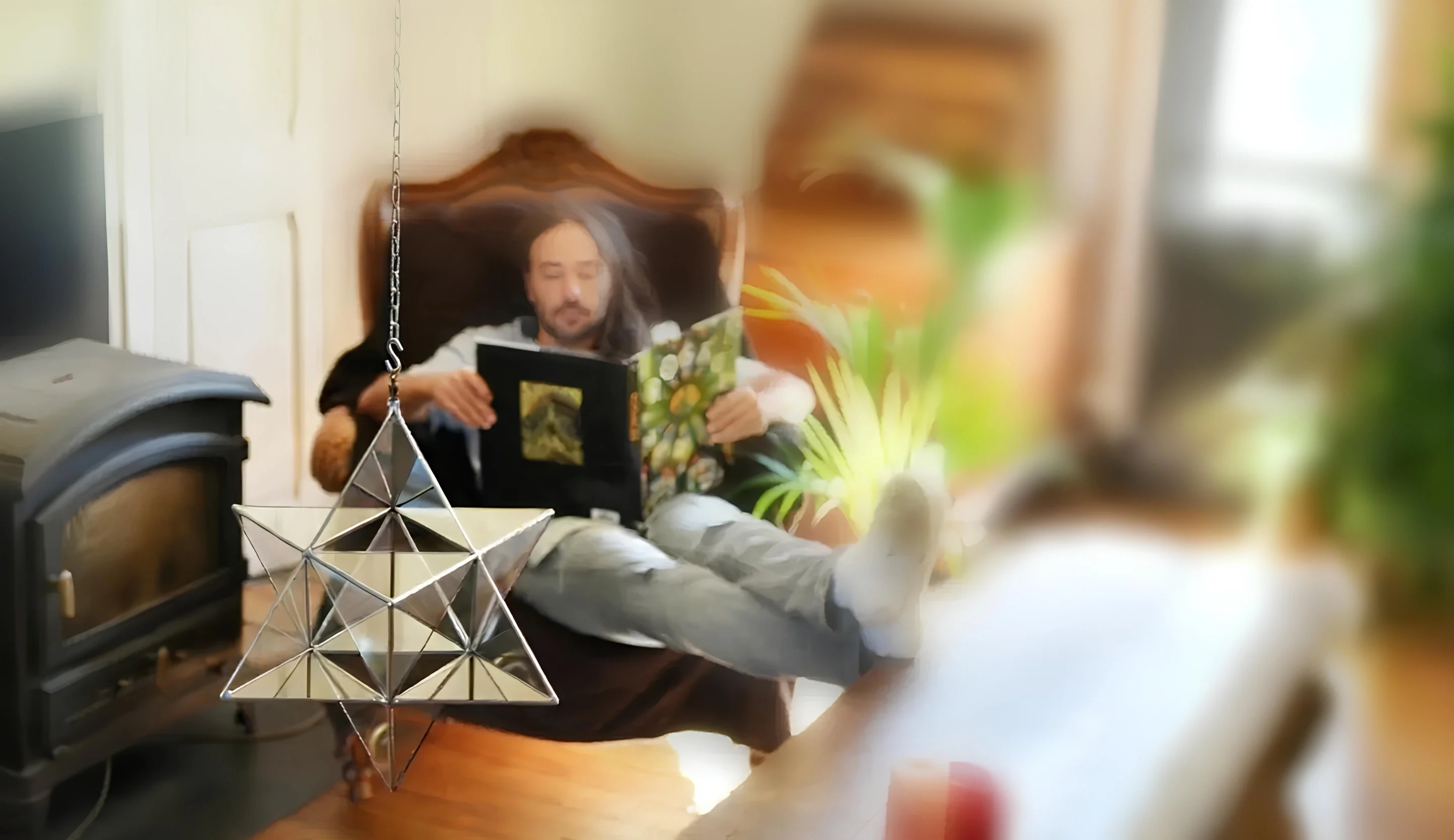 Merkabah450 €
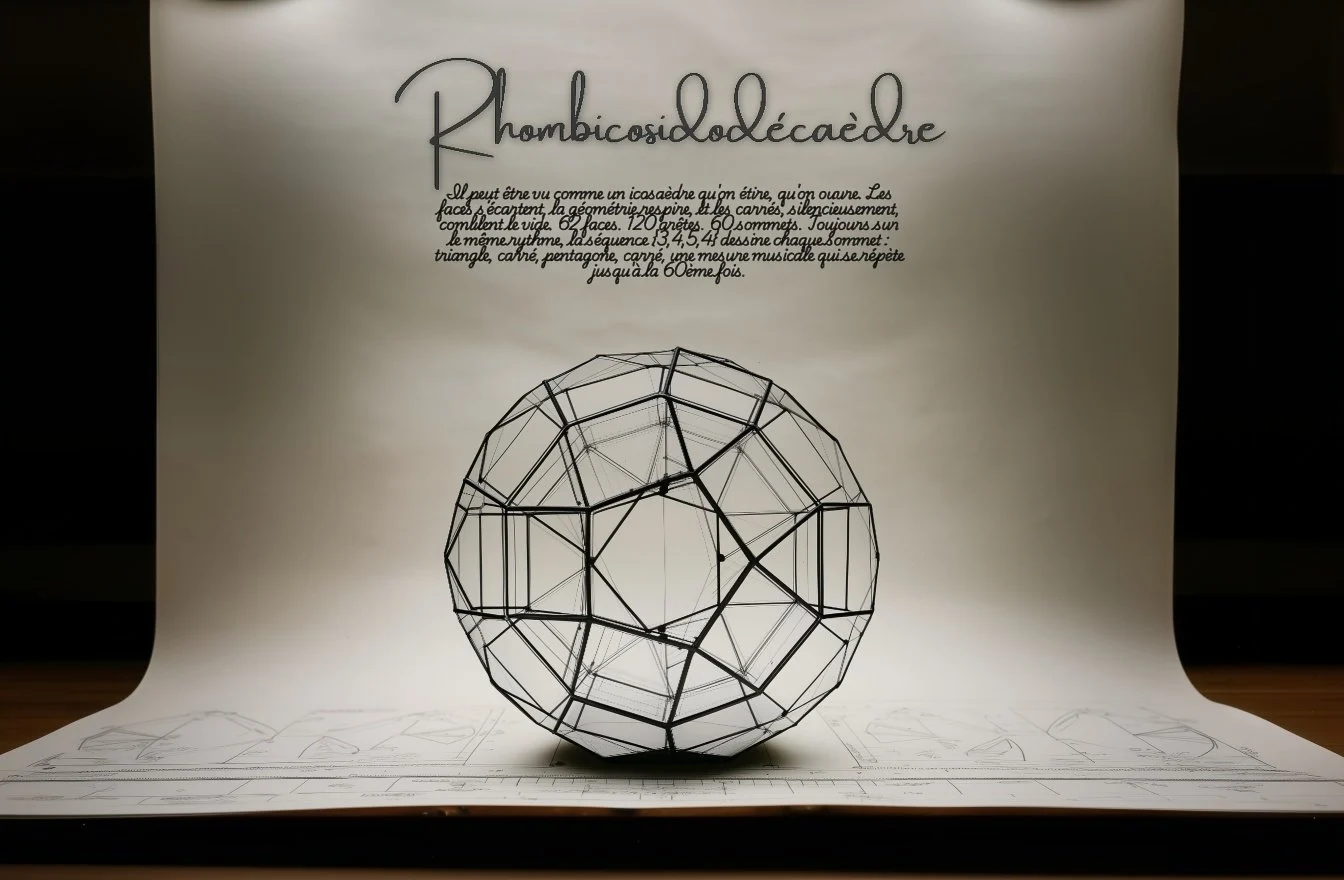
The art of extending the faces or edges of a polyhedron until they blossom into starry points. To stellate a geometry is to extend its faces until they meet beyond the body, sending out points like so many rays. The solid becomes a star: it radiates, it soars, it fills the space with a more ardent presence.
A dynamic expression of the processes of creation and expansion. The star reaches toward complexity without ever forgetting where it comes from. Unable to escape the sphere…
The form of a sonnet, in its poetic loop.Of an omen that, in weightlessness,
a solid will become a stellation.